Breakfast Guide · 4 min read
How to Poach an Egg
Learn how to poach an egg with a neat, tender white every time: choosing eggs, water temperature, timing for soft or firm yolks, and how to poach eggs ahead.
By Tasty Nest Recipes Editorial Team · Published
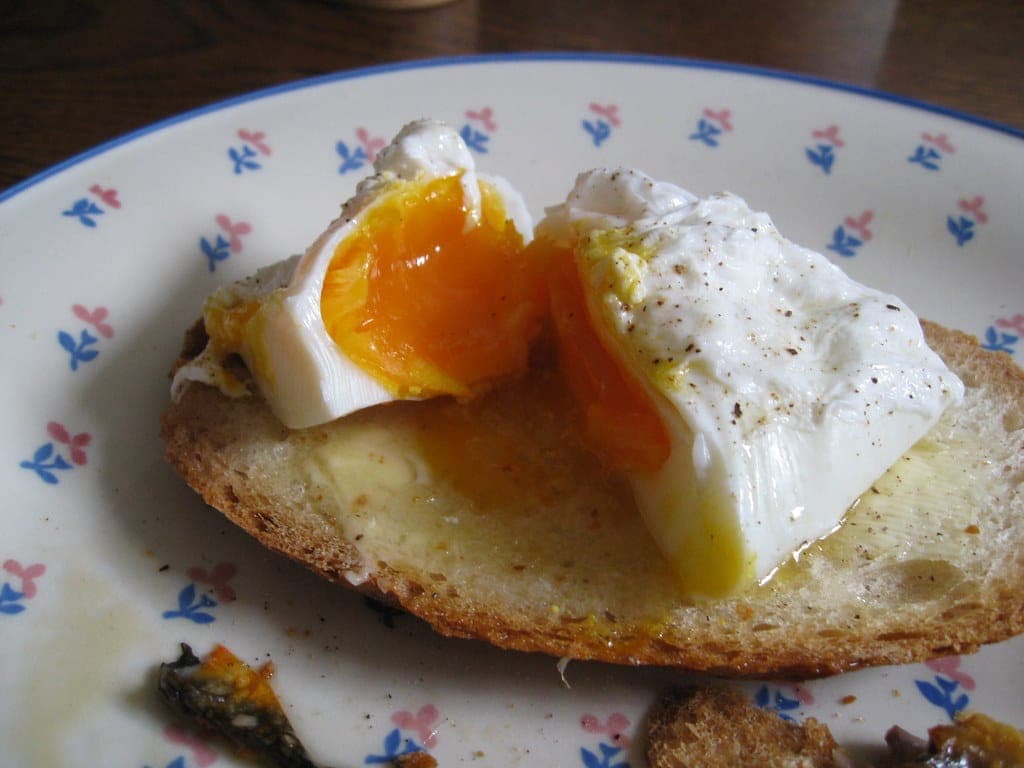
Photo: Kai Hendry · CC BY 2.0. Illustrative photo; your results may look different.
A poached egg is simply an egg cooked out of its shell in hot water, yet it has a reputation for being tricky. Ragged, wispy whites and eggs that stick to the pan put many cooks off trying.
In fact, a few small details make poaching reliable: fresh eggs, removing the thin, watery part of the white, and water that is hot but not boiling. This guide covers each step, how long to cook the egg for the yolk you want, and how to poach eggs ahead for brunch.
What you need
- Fresh eggs. As eggs age, their whites thin out and spread in the water. The fresher the egg, the neater the result.
- A wide saucepan or deep skillet with at least 3 inches (7.5 cm) of water.
- A fine-mesh sieve and a small cup or ramekin.
- A slotted spoon and a plate lined with paper towel.
- White vinegar (optional; see below).
Step-by-step method
1. Heat the water
Bring the water to a boil, then lower the heat until it is barely simmering, with small bubbles rising from the bottom but no rolling boil. Roughly 180 to 190°F (82 to 88°C) is ideal. Vigorous bubbling tears the whites apart.
2. Strain the egg
Crack an egg into the fine-mesh sieve set over a bowl and let it sit for 20 to 30 seconds, swirling gently. The thin, runny part of the white drains away, leaving the firm white that holds its shape. Tip the egg into the cup.
3. Add vinegar if you like
A splash of vinegar, about 1 tablespoon per 4 cups of water, helps the white set faster. It is optional, especially if you strain the eggs, and can leave a faint taste. If you skip it, very fresh eggs and gentle water matter even more.
4. Slide in the egg
Lower the cup close to the water and gently tip the egg in. If you are cooking a single egg, you can stir the water to make a gentle whirlpool first, then drop the egg into the centre; the spinning water wraps the white around the yolk. For several eggs, skip the whirlpool and add them one at a time around the pan.
5. Cook and lift out
Cook without stirring (see the timing guide below), then lift the egg out with the slotted spoon. Rest the spoon on the paper towel for a moment to drain, trim any ragged edges with scissors if you like, and serve immediately.
Timing: soft, medium or firm
Timing depends on the size of the egg, how cold it is and the exact water temperature, so use these as a starting point for large eggs straight from the fridge:
- About 3 minutes: the white is just set and the yolk is runny.
- About 4 minutes: the yolk is thickened and jammy at the edges.
- About 5 to 6 minutes: the yolk is firm.
A note on runny yolks
The USDA Food Safety and Inspection Service and the FDA advise cooking eggs until both the white and the yolk are firm, because raw and undercooked eggs can carry Salmonella. This matters most for people who are pregnant, young children, older adults and anyone with a weakened immune system. If you love a runny yolk, look for pasteurised shell eggs, which some supermarkets sell; they can be poached in exactly the same way.
How to poach eggs ahead for a crowd
Restaurants rarely poach eggs to order, and you do not have to either. Poach the eggs, cooking them for about 30 seconds less than usual, then transfer them straight to a bowl of ice water to stop the cooking. Refrigerate them in the water for up to 2 days.
To serve, lower the eggs into a pan of hot (not simmering) water for 45 to 60 seconds to warm through, then drain on paper towel. This makes it easy to serve a whole table of eggs Benedict or poached eggs on toast at the same time.
Troubleshooting
The white spreads into wisps
The egg is probably not very fresh, or the water is too lively. Strain the egg and lower the heat.
The egg sticks to the bottom
Make sure the water is deep enough and nudge the egg gently with the spoon after the first 30 seconds once the white has started to set.
The egg tastes of vinegar
Use less vinegar, or none at all, and rinse the cooked egg briefly in a bowl of warm water before serving.
Frequently asked questions
Can you poach an egg without vinegar?
Yes. Vinegar only helps the white set a little faster. Straining the egg and keeping the water at a gentle simmer are far more important, and give neat poached eggs without any vinegar taste.
How many eggs can you poach at once?
In a wide pan you can poach four to six eggs at a time. Add them one by one around the edge, keep track of the order, and lift them out in the same order so each cooks for the same time.
Can you poach eggs in the microwave?
You can, by cracking an egg into a cup of water and microwaving it in short bursts, but results vary a lot between microwaves and eggs can burst. The stovetop method is more reliable.
The bottom line
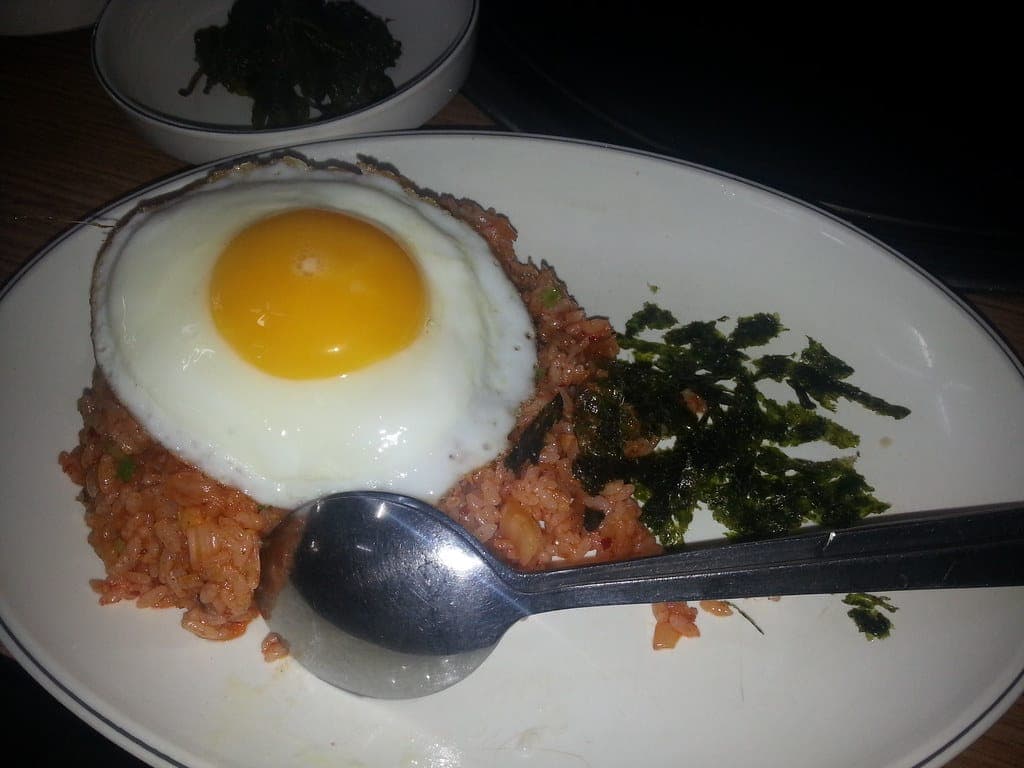
For neat poached eggs, start with fresh eggs, strain away the watery white, and slide them into water that is barely simmering. Cook for 3 to 6 minutes depending on how firm you want the yolk, and poach ahead into ice water when you are feeding a crowd. Serve them on toast, over a bowl of kimchi fried rice or alongside shakshuka.
Put it into practice
Recipes to try

More guides
Lunch Guide · 4 min read
How to Pack a Lunch Safely
Keep packed lunches cold and safe until you eat them: insulated bags, ice packs, the two-hour rule, keeping hot food hot and which foods travel best.
Beef Guide · 4 min read
Steak Doneness Temperatures: A Guide From Rare to Well Done
Steak doneness temperatures from rare to well done, when to take the steak off the heat, how to use a thermometer, and what USDA food-safety guidance recommends.
Seafood Guide · 3 min read
How to Tell When Fish Is Done
How to tell when fish is cooked: the safe internal temperature, what opaque and flaky really look like, and how to check salmon, white fish, shrimp and shellfish.
Salads Guide · 3 min read
How to Make Vinaigrette (The 3-to-1 Ratio and Beyond)
Make vinaigrette in two minutes with the classic 3-to-1 ratio. How to emulsify it, balance the flavour, store it, and five variations to try with your salads.