Kitchen Guide · 2 min read
How to Tell When Meat Is Done: A Guide to Safe Internal Temperatures
Colour and cooking times are unreliable. Here is how to use a food thermometer and the minimum safe internal temperatures for poultry, beef, pork, fish and leftovers.
By Tasty Nest Recipes Editorial Team · Published
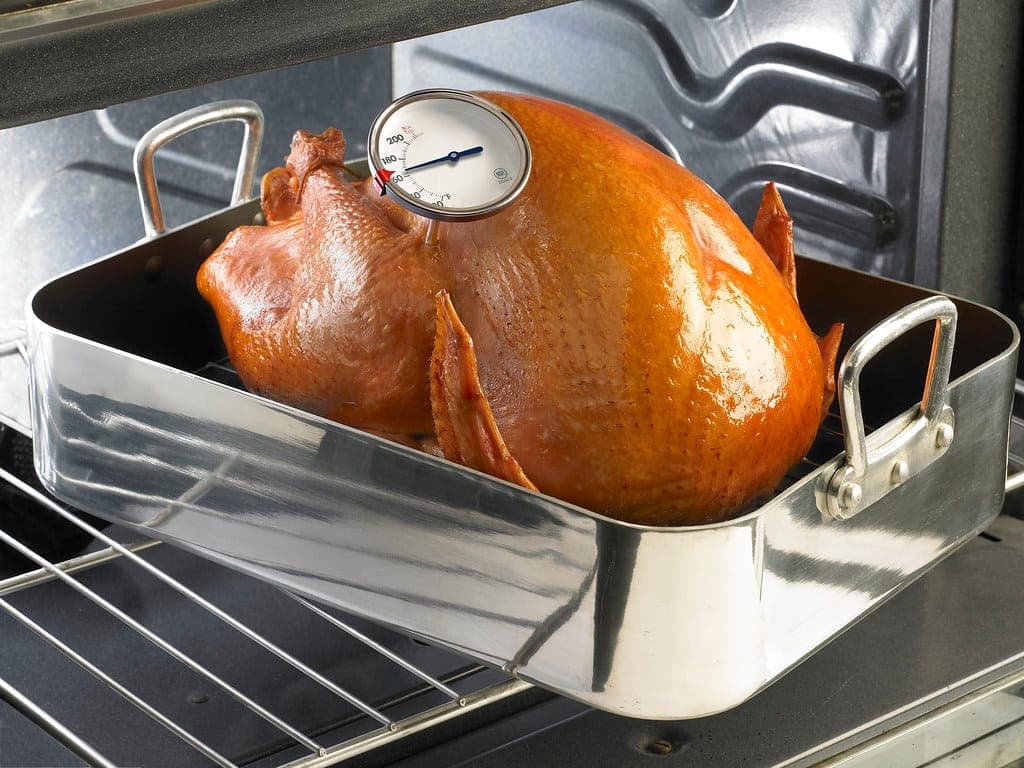
Photo: USDAgov · Public Domain Mark. Illustrative photo; your results may look different.
Why a thermometer beats guesswork
Recipe times are a helpful guide, but every oven, pan and cut of meat is different. A chicken that is done in an hour in one kitchen might need 75 minutes in another. Colour is not a reliable signal either: meat can brown before it is safely cooked, and some meat stays pink even when it is fully done.
An inexpensive instant-read thermometer removes the guesswork. It tells you exactly when food has reached a safe temperature, and it helps you avoid overcooking, which is the most common reason for dry chicken and tough pork.
How to take an accurate reading
Where and how you measure makes a big difference. A few habits will give you consistent, reliable readings.
- Insert the probe into the thickest part of the food, away from bone, fat and gristle, which can give false readings.
- For whole poultry, check the thickest part of the thigh and the thickest part of the breast.
- For thin cuts such as chicken breasts or burgers, insert the thermometer sideways from the edge so the tip sits in the centre.
- Check in more than one place, especially for large roasts or irregular shapes.
- Clean the probe with hot, soapy water after each use to avoid spreading bacteria.
Minimum safe internal temperatures
The following minimum temperatures are recommended by the U.S. Department of Agriculture's Food Safety and Inspection Service (FSIS). Always check the latest official guidance where you live, as recommendations can differ by country.
- Poultry (whole birds, pieces and ground poultry): 165°F (74°C).
- Ground beef, pork, veal and lamb: 160°F (71°C).
- Beef, pork, veal and lamb steaks, chops and roasts: 145°F (63°C), followed by a 3-minute rest.
- Fish and shellfish: 145°F (63°C), or until the flesh is opaque and separates easily with a fork.
- Egg dishes such as casseroles and quiches: 160°F (71°C).
- Leftovers and casseroles: reheat to 165°F (74°C).
Why resting matters
Meat continues to cook for a few minutes after it comes off the heat, a process known as carryover cooking. Resting also allows juices to redistribute, so less ends up on the cutting board. For whole roasts and birds, a rest of 10 to 15 minutes loosely covered with foil is usually ideal.
Choosing a thermometer
A digital instant-read thermometer that gives a reading within a few seconds is the most versatile option for home cooks. Leave-in probe thermometers with an external display are useful for large roasts, because you can monitor the temperature without opening the oven door. Whichever you choose, check its accuracy occasionally by placing the probe in a glass of ice water; it should read 32°F (0°C).
Put it into practice
Recipes to try
More guides
Breakfast Guide · 4 min read
How to Poach an Egg
Learn how to poach an egg with a neat, tender white every time: choosing eggs, water temperature, timing for soft or firm yolks, and how to poach eggs ahead.
Lunch Guide · 4 min read
How to Pack a Lunch Safely
Keep packed lunches cold and safe until you eat them: insulated bags, ice packs, the two-hour rule, keeping hot food hot and which foods travel best.
Beef Guide · 4 min read
Steak Doneness Temperatures: A Guide From Rare to Well Done
Steak doneness temperatures from rare to well done, when to take the steak off the heat, how to use a thermometer, and what USDA food-safety guidance recommends.
Seafood Guide · 3 min read
How to Tell When Fish Is Done
How to tell when fish is cooked: the safe internal temperature, what opaque and flaky really look like, and how to check salmon, white fish, shrimp and shellfish.