Recipe Guide · 4 min read
How to Dry Brine a Whole Chicken
Dry brining is the simplest way to a juicier, better-seasoned roast chicken. Learn how much salt to use, how long to leave it and how it helps the skin crisp.
By Tasty Nest Recipes Editorial Team · Published
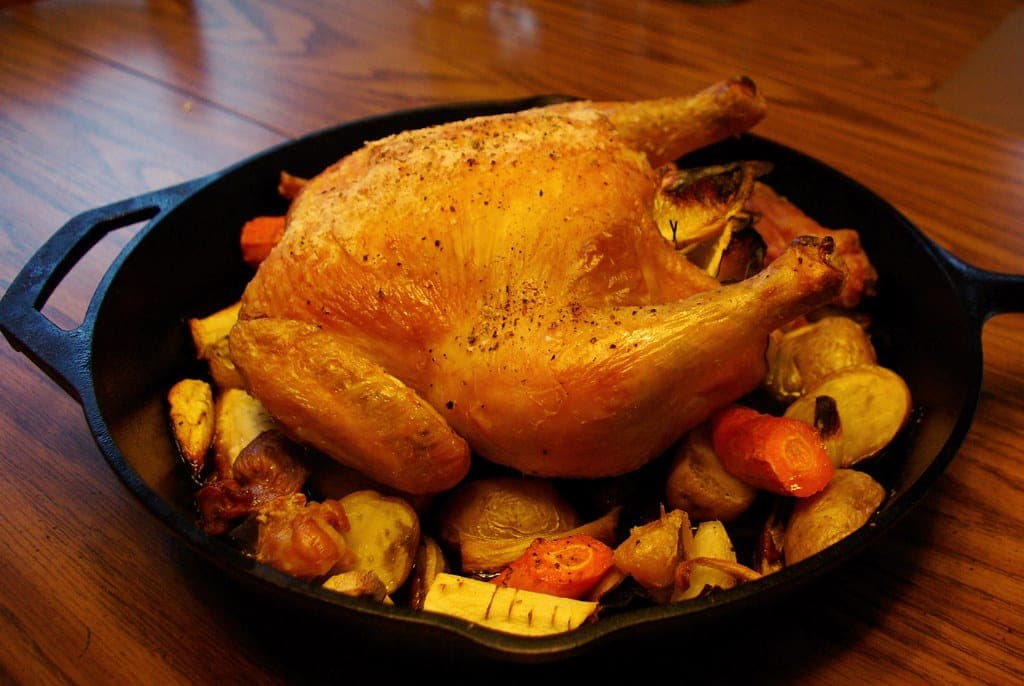
Photo: Chuck.falzone · CC BY 2.0. Illustrative photo; your results may look different.
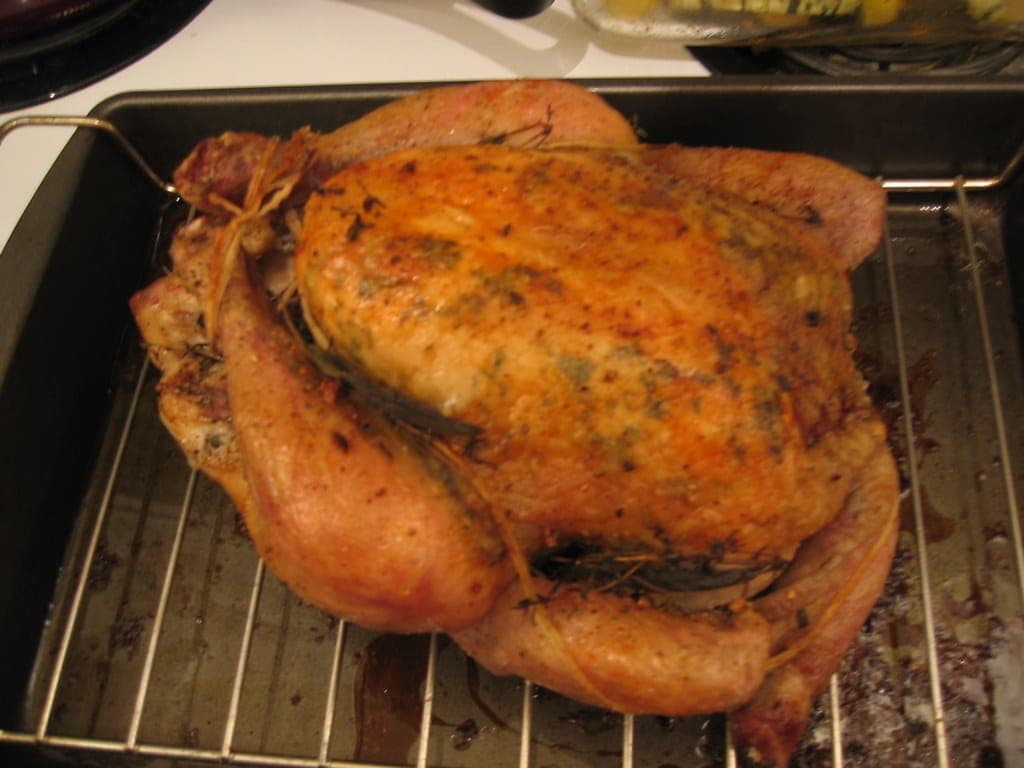 This guide goes with our recipeLemon Herb Roast Chicken 1 hr 45 min · 4 servings
If there is one step that improves almost any roast chicken, it is salting it ahead of time. This is called dry brining: you season the bird with salt and leave it uncovered in the refrigerator for several hours or overnight before cooking.
It needs no special equipment, no bucket of salt water and no extra ingredients. Here is how it works, how much salt to use, how long to leave it, and how to adjust our Lemon Herb Roast Chicken recipe if you dry brine first.
What dry brining does
Salt on the surface of raw chicken first draws out a little moisture. Given time, the salt dissolves into that moisture and is gradually absorbed back into the meat. The result is chicken that is seasoned more deeply than surface salting alone can achieve.
Leaving the chicken uncovered in the fridge also dries the skin. Dry skin browns faster and crisps more readily in the oven, which is why dry-brined chickens often have noticeably better skin.
Compared with a wet brine, a dry brine takes up far less fridge space, does not dilute the chicken's flavour with water and leaves the skin drier rather than waterlogged.
How much salt to use
A good starting point is salt equal to about 0.5% of the chicken's weight. In spoons, that is roughly 3/4 teaspoon of Diamond Crystal kosher salt per pound of chicken. For a typical 4-pound (1.8 kg) bird, that comes to about 1 tablespoon of Diamond Crystal, or 9 grams if you weigh it.
If you prefer your food less salty, use a little less. It is easier to add salt at the table than to take it away.
Kosher salt brands are not interchangeable
Salt crystals vary in size, so the same spoonful can contain very different amounts of salt. Diamond Crystal kosher salt has large, light flakes. Morton kosher salt is denser, and fine table salt is denser still. If you use Morton kosher salt, use about 1/2 teaspoon per pound (about 2 teaspoons for a 4-pound bird); with fine table salt, use slightly less again. Weighing the salt avoids the problem entirely.
How long to dry brine
Even an hour helps, but the benefits really show after about 4 hours. Overnight, around 12 to 24 hours, is ideal and fits neatly into a schedule: salt the chicken the evening before and roast it the next day.
Keep the chicken in the refrigerator the whole time, at 40°F (4°C) or below. Leaving raw poultry out at room temperature for long periods is not safe.
Step-by-step method
- Remove the giblets from the cavity and pat the chicken very dry inside and out with paper towels. There is no need to rinse it first; rinsing raw poultry spreads bacteria around the sink and does not make it safer.
- Set the chicken on a wire rack placed over a rimmed tray or plate. This lets air reach the underside and keeps the bird out of any juices.
- Measure the salt and sprinkle it evenly from about a foot above the bird, which helps it fall in an even layer. Season the back, sides, legs and a little inside the cavity.
- Place the chicken, uncovered, on a low shelf in the refrigerator, away from ready-to-eat foods.
- When you are ready to cook, there is no need to rinse off the salt. Simply pat away any moisture on the surface and continue with your recipe.
Cooking a dry-brined chicken
If you are making our Lemon Herb Roast Chicken, dry brine with the amount above (or the recipe's own 1 1/2 teaspoons if you prefer it lighter) and skip the salt in step 4, as the recipe tip notes. Everything else stays the same: the herb butter still goes under the skin, and the chicken is done when the thickest part of the thigh reaches 165°F (74°C).
Because the skin is drier, it may brown a little faster. Check the bird about 10 minutes early, and tent the breast loosely with foil if it is getting too dark before the thighs are cooked.
Frequently asked questions
Do you rinse a dry-brined chicken before cooking?
No. The salt has been absorbed into the meat, so there is nothing to rinse away, and rinsing would wet the skin you have just dried. Pat the surface dry and cook it as normal.
Can you dry brine for too long?
Up to 24 hours is ideal for a whole chicken. Much longer and the meat can start to taste ham-like and the texture becomes firmer. If your plans change, roasting it within a day or two of salting is fine.
Can I add herbs and pepper to a dry brine?
Yes. Black pepper, dried herbs, garlic powder or lemon zest can be mixed into the salt. Fresh herbs and garlic tend to burn on the surface, so save them for the herb butter under the skin.
The bottom line
Dry brining is the easiest upgrade you can make to a roast chicken: salt it evenly, leave it uncovered in the fridge for 4 to 24 hours, then roast it as usual. You get meat that is seasoned all the way through and skin that browns and crisps beautifully, with no extra equipment and almost no extra effort.
Ready to cook?
Put this into practice with our lemon herb roast chicken recipe, or browse more chicken recipes.
Put it into practice
Recipes to try


More guides
Recipe Guide · 5 min read
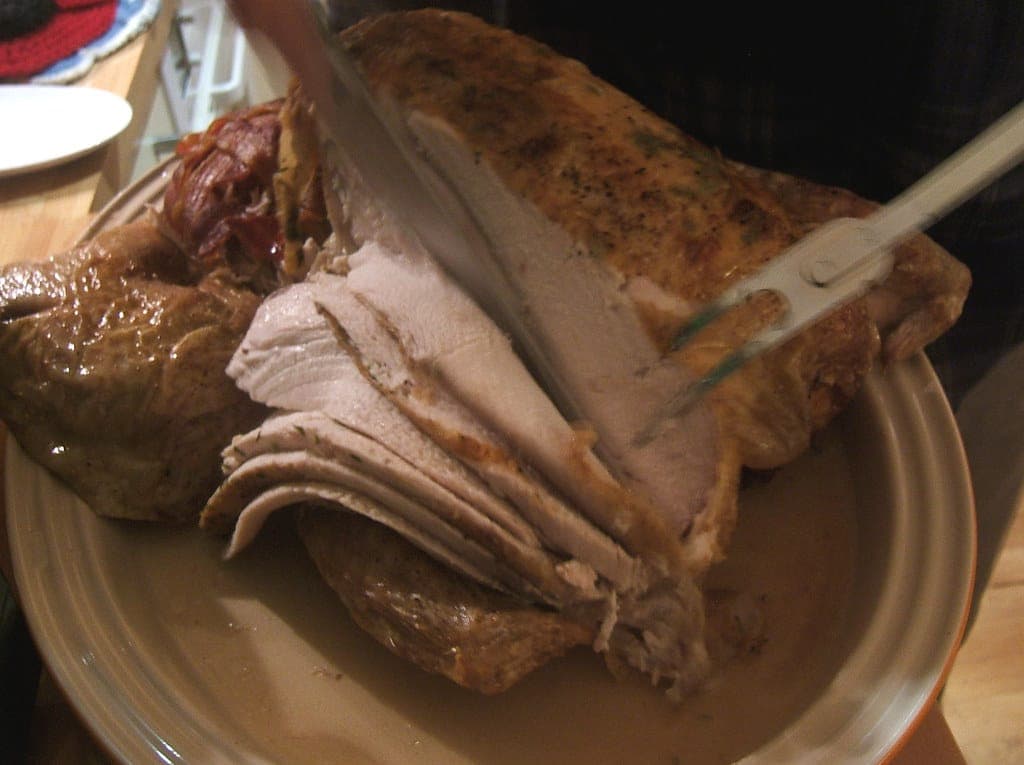
How to Carve a Roast Chicken
Carve a roast chicken neatly in about five minutes: what tools you need, how long to rest it, and how to remove the legs, wings and breast in clean slices.
Recipe Guide · 4 min read
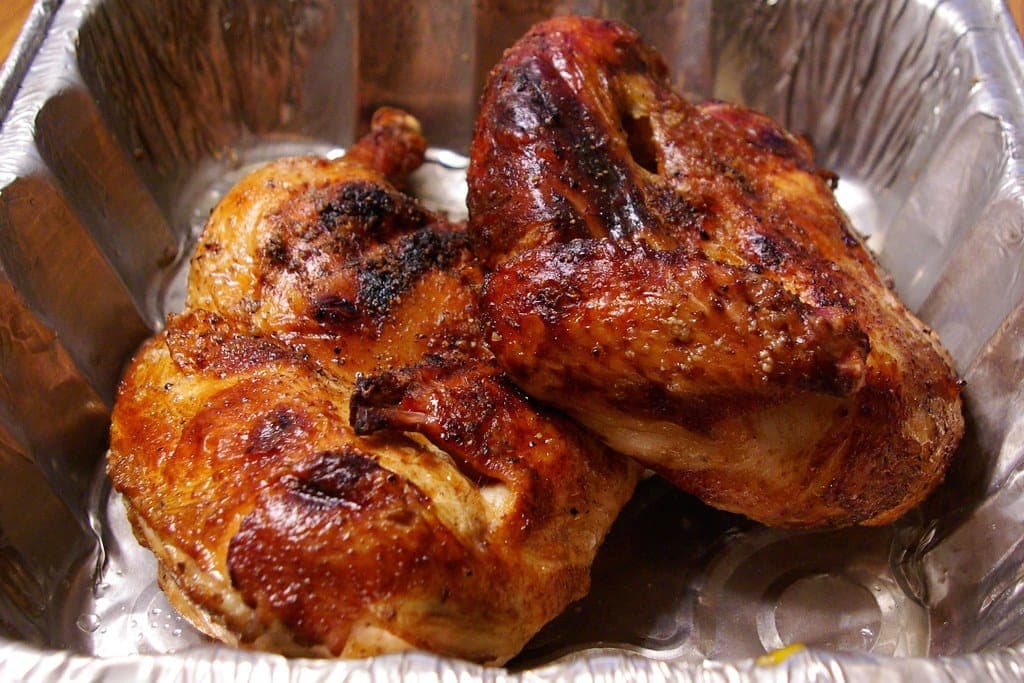
Why Isn't My Roast Chicken Skin Crispy?
Soft, pale skin on a roast chicken almost always comes down to moisture or heat. Find the cause of yours and the fix, plus how to re-crisp skin after cooking.
Recipe Guide · 4 min read
What to Do With Leftover Roast Chicken
Turn leftover roast chicken into soups, salads, pasta and more. Twelve easy ideas, plus how to store and reheat cooked chicken safely so nothing goes to waste.

Breakfast Guide · 4 min read
How to Poach an Egg
Learn how to poach an egg with a neat, tender white every time: choosing eggs, water temperature, timing for soft or firm yolks, and how to poach eggs ahead.