Tamagoyaki (Japanese Rolled Omelette)
Tamagoyaki, the slightly sweet Japanese rolled omelette, built from thin layers of seasoned egg. Learn the roll-and-pour technique in a square or round pan.
By Tasty Nest Recipes Editorial TeamPublished
15 min total 1 roll (about 8 slices)Intermediate
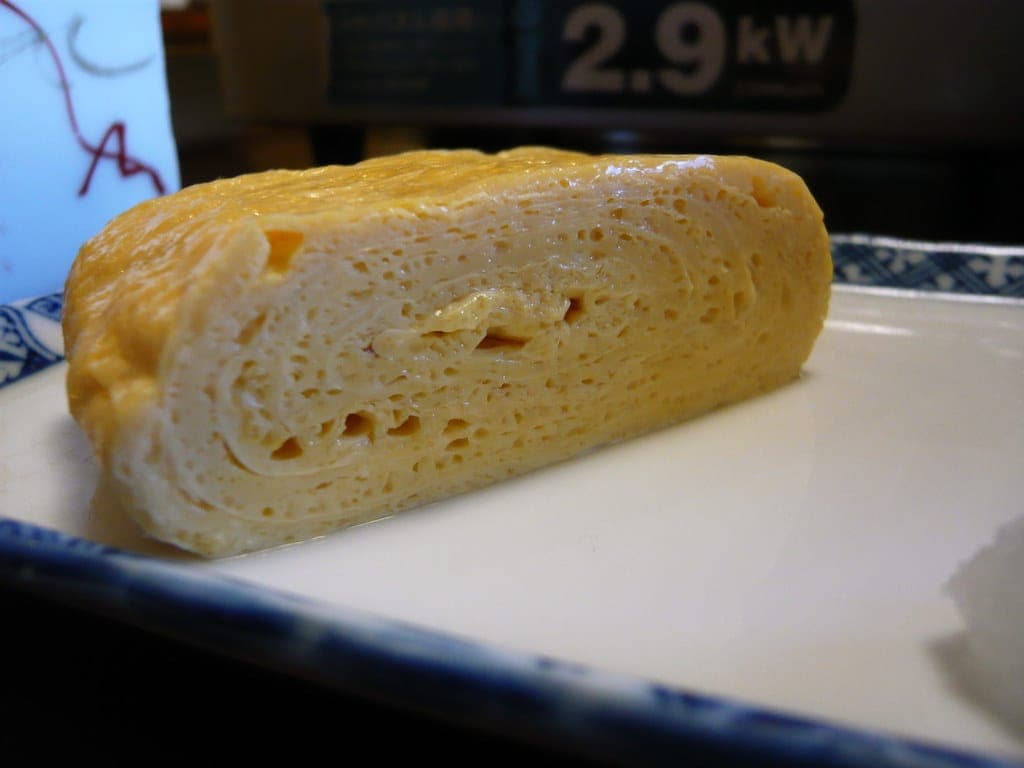
Photo: WordRidden · CC BY 2.0. Illustrative photo; your results may look different.
About this recipe
Tamagoyaki is a Japanese omelette made by cooking thin layers of seasoned egg and rolling them up one after another into a neat, layered log. It is a staple of Japanese breakfasts and bento boxes.
The eggs are seasoned with a little sugar, soy sauce and mirin, giving a delicate sweet-savoury flavour. A rectangular tamagoyaki pan makes the neatest roll, but a small round nonstick pan works too.
Equipment you'll need
- Tamagoyaki pan or 8-inch nonstick skillet
- Chopsticks or thin spatula
- Paper towel
Tips for success
- Keep the heat on the low side; the sugar makes the egg brown quickly, and tamagoyaki should be golden yellow.
- Rolling while the top is still slightly wet helps the layers stick together.
- Do not worry if the first roll is messy; the outer layers hide it.
Substitutions and variations
- Use water instead of dashi for a vegetarian version.
- Omit the sugar and mirin for a savoury dashimaki-style omelette.
- Add finely sliced scallions or nori between layers.
Storage
To store: Refrigerate in an airtight container for up to 2 days. It is often eaten cold in bento lunches.
Recipe
Tamagoyaki (Japanese Rolled Omelette)
Tamagoyaki, the slightly sweet Japanese rolled omelette, built from thin layers of seasoned egg. Learn the roll-and-pour technique in a square or round pan.
- Prep
- 5 min
- Cook
- 10 min
- Total
- 15 min
- Yield
- 1 roll (about 8 slices)
- Level
- Intermediate
Ingredients
Tick off ingredients as you gather them.
Instructions
Step 1: Season the eggs
Beat the eggs gently with chopsticks or a fork (try not to make them frothy), then stir in the dashi, sugar, soy sauce, mirin and salt until the sugar dissolves.
Step 2: Oil the pan
Heat the pan over medium-low heat. Fold a paper towel, dip it in the oil and wipe a thin film over the pan.
Step 3: Cook the first layer
Pour in about a quarter of the egg and tilt to cover the base. Pop any large bubbles. When the egg is mostly set but still slightly wet on top, roll it from the far side towards you into a log.
Step 4: Add more layers
Push the roll to the far side, wipe the empty part of the pan with oil, and pour in another quarter of the egg, lifting the roll so the new egg flows underneath. When nearly set, roll it back towards you around the first roll.
Step 5: Repeat
Repeat until all the egg is used, then cook the finished roll for 30 seconds on each side to make sure it is set through.
Step 6: Shape and slice
Transfer to a bamboo mat or paper towel, wrap and press gently into shape for 2 minutes. Slice into 1-inch pieces and serve warm or at room temperature.
Cuisine: Japanese · Course: Breakfast
Estimated nutrition per serving
- Calories
- 185
- Protein
- 12 g
- Fat
- 12 g
- Carbs
- 6 g
- Fibre
- 0 g
- Sugars
- 5 g
Approximate values estimated from typical nutrition data for the listed ingredients, excluding optional toppings and serving suggestions. Actual values vary with brands, portion sizes and substitutions. Not verified by a dietitian or laboratory analysis.
tastynestrecipes.com/recipes/tamagoyaki
Keep cooking